

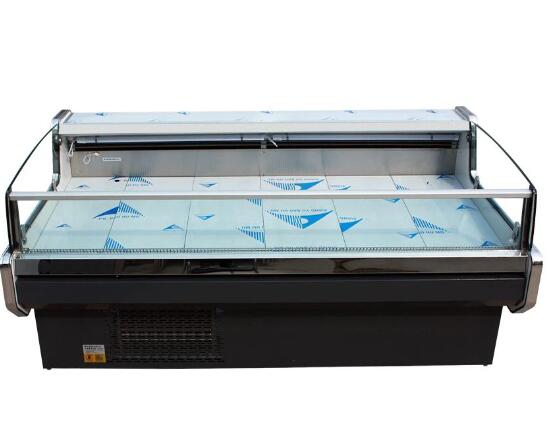
How to maximize the service life of the fresh meat display refrigerator?
Maximizing the service life of a fresh meat display refrigerator is essential for maintaining food safety, minimizing operational costs, and ensuring a reliable customer experience.
These refrigeration units represent a significant investment, and proper care and maintenance can extend their lifespan well beyond the manufacturer's estimates.
To get the most out of your fresh meat display refrigerator, it's important to focus on routine maintenance, correct usage, environmental conditions, and staff training. Below are several key strategies to help you maximize the service life of your unit, explained in detail.
1. Follow the Manufacturer's Maintenance Schedule
Every refrigeration unit comes with a manufacturer-recommended maintenance plan, and following it diligently is the first step to prolonging the unit's life. This includes:
Routine cleaning of interior and exterior surfaces
Checking refrigerant levels
Inspecting and replacing worn-out seals, gaskets, and parts
Lubricating moving components, such as fan motors (if applicable)
2. Clean Condenser and Evaporator Coils Regularly
Dirty coils are one of the most common causes of compressor strain and premature equipment failure. Dust, grease, and food particles can accumulate on the condenser and evaporator coils, reducing airflow and making it harder for the refrigerator to maintain the proper temperature.
Clean coils at least once a month, or more often in dusty or greasy environments.
Use a soft brush or vacuum to gently remove debris.
If necessary, a coil cleaning solution can be used for more thorough cleaning.
Clean coils help the refrigeration system operate efficiently, reduce energy consumption, and extend compressor life.
3. Check Door Seals and Gaskets Frequently
Door gaskets and seals are critical for maintaining the air-tight integrity of the display refrigerator. Over time, they can become cracked, brittle, or loose, allowing warm air to enter and cold air to escape. This forces the compressor to work harder, increasing wear and reducing lifespan.
Inspect seals weekly for signs of damage.
Clean gaskets regularly with mild soap and water to remove food residue and mold.
Replace any damaged or worn-out gaskets promptly.
Maintaining door seals helps preserve internal temperatures and reduces energy consumption.
4. Avoid Overloading and Blocked Vents
Overloading the display unit with too much meat can block airflow, disrupt temperature uniformity, and make the compressor work harder. Similarly, placing items in front of the evaporator or condenser vents can interfere with proper air circulation.
Keep products organized and spaced properly.
Avoid stacking meat too high or too close to the walls of the display.
Make sure ventilation areas are clear to allow air to circulate freely.
Proper loading practices help maintain even cooling and reduce mechanical strain.
5. Monitor Temperature Settings
Running the refrigerator at incorrect temperatures can lead to either overcooling or undercooling, both of which can reduce its lifespan. Regularly check that the thermostat is set within the manufacturer's recommended range-typically 0°C to 4°C (32°F to 39°F) for fresh meat.
Some advanced units come with digital temperature monitors and alarms that alert you to fluctuations. If your model doesn't have this feature, consider installing an external thermometer for added accuracy.
6. Ensure Proper Placement and Ventilation
Where and how the unit is installed affect its performance and longevity. Fresh meat display refrigerators need ample space around them for ventilation. If installed in a cramped or poorly ventilated space, the compressor may overheat and wear out prematurely.
Leave at least 6–12 inches of clearance around the back and sides.
Keep the unit away from direct sunlight, ovens, or heat-generating appliances.
Ensure the floor is level to avoid vibration and stress on components.
Proper placement reduces heat buildup and prevents unnecessary strain on the cooling system.


